What is a roguelike game? Meaning, rules and examples
A roguelike is a game you play in runs, on levels that change every time, where death sends you back to the start. Here is the rest.

A roguelike is a game you play in runs: one attempt from the start to the end, on levels that are generated fresh every time. When you die, the run is over for good and you start again from the beginning. That loss is called permadeath, and it is the heart of the genre. You lose your character, but you keep what you learned, and that knowledge is what carries you a little further each time.
The word means "like Rogue", a 1980 game that worked exactly this way. Today it covers far more than dungeon games: card games like Slay the Spire and Balatro, action games like Hades, shooters and auto battlers all borrow the same loop. Here is what a roguelike is, the rules that define it, where it came from, and which ones to try first.
Our game
Path of Orren
- Free, coming soon to iPhone and Android
- Join the waitlist
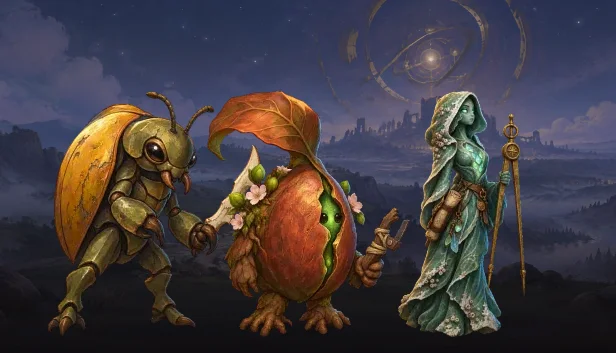
Full disclosure: this one is ours. Path of Orren is a free dark-fantasy party roguelike for iPhone and Android. Every run starts with two heroes on a three-act road of fights, forges and strange events. The battles play out on their own, and the choices you make between them decide who reaches the end. No ads. It isn't out yet: join the waitlist to play it first.
Roguelike meaning: the game called Rogue
Rogue was written in 1980 by Michael Toy and Glenn Wichman, two students at the University of California, Santa Cruz. You played an adventurer going down into the Dungeons of Doom to find the Amulet of Yendor. Computers then had little memory, so everything was drawn with text characters: you were an @ sign, and the monsters were letters.
Two ideas made Rogue different from the adventure games of its time. Every dungeon was generated randomly, so there was no map to memorize. And death was final: there was no earlier save to go back to. Rogue spread across university computers and was included in BSD Unix 4.2, and games built on the same ideas followed, among them Hack, NetHack, Angband and ADOM. Around 1993, players on Usenet needed a name for the discussion groups about these games, and they settled on roguelike.
Rogue was not the very first game of its kind. Beneath Apple Manor (1978) already had random dungeons and permanent death, and PLATO university terminals had dungeon games as early as 1975. The genre took its name from Rogue because Rogue was the one everyone played.
What makes a game a roguelike
Modern roguelikes look nothing like Rogue, but most of them share five things:
- Runs. A game is a series of attempts, each with a beginning and an end, usually a final boss.
- Permadeath. Dying ends the run. There is no checkpoint to reload.
- Procedural generation. Levels, enemies and rewards are generated by the game, so no two runs are the same.
- Builds. You find items, cards or powers along the way and combine them, and the fun is in seeing how far a build can go.
- Learning. Every run teaches you something about the game, so you improve even when you lose.
Turns, grids and ASCII graphics were part of the original definition, but they are optional today. Hades is a fast action game, Vampire Survivors has you dodging hundreds of monsters in real time, and Balatro is played with poker hands. They are still built on runs, randomness and permadeath.
Roguelike definition: the Berlin Interpretation
In 2008, players and developers at the International Roguelike Development Conference in Berlin tried to pin the word down. They looked at five classic games (ADOM, Angband, Crawl, NetHack and Rogue) and listed what they had in common. The result, posted by Jeff Lait in September 2008, is known as the Berlin Interpretation.
Its nine high-value factors are:
- random environment generation
- permadeath
- turn-based play
- a grid-based world
- non-modal play (every action is available from the same screen)
- complexity, with several ways to solve a problem
- resource management
- hack and slash, fighting lots of monsters
- exploration and discovery, including items you have to identify
It also lists low-value factors: one character, monsters that follow the same rules as you, a tactical challenge, ASCII graphics, dungeons, and numbers on screen for your stats. Games that tick most of the list are called traditional roguelikes, and fans still play and update them: NetHack, Dungeon Crawl Stone Soup, Caves of Qud and, on phones, Shattered Pixel Dungeon.
Roguelikes today: roguelites and genre mixes
Starting in the late 2000s, independent developers took the run structure into other genres. Spelunky (2008) made it a platformer, The Binding of Isaac (2011) a twin-stick shooter and FTL (2012) a spaceship game. Many of these games also let you keep something between runs, such as upgrades, money or new characters. Games that do are called roguelites. The difference between the two words is explained, with fifteen games sorted, in our guide to roguelike vs roguelite.
The run is now a building block that fits almost any genre:
| Kind | What a run looks like | Examples |
|---|---|---|
| Traditional roguelike | Turn-based dungeon, one character, one life | NetHack, Shattered Pixel Dungeon |
| Roguelike deckbuilder | Build a deck of cards while climbing a map | Slay the Spire, Balatro, Monster Train 2 |
| Action roguelite | Fight in real time through rooms or biomes | Hades, Dead Cells, The Binding of Isaac |
| Survivors-like | Dodge waves of enemies while your weapons fire on their own | Vampire Survivors, Brotato |
| Roguelike auto battler | Build a team between fights and watch the battles play out | How Many Dudes?, He is Coming |
| Party roguelite | Lead a group of heroes through a dangerous journey | Darkest Dungeon |
Japan has its own branch. Chunsoft's Mystery Dungeon series began in 1993 with a Dragon Quest spin-off, Torneko no Daibōken, and went on with Shiren the Wanderer (1995) and Pokémon Mystery Dungeon. These games made the genre friendlier for consoles, and roguelikes are still hugely popular in Japan.
Why people love roguelikes
Losing everything sounds harsh, but it is what makes a roguelike work. Because every run is new, you can't follow a guide or memorize a level, and you have to think about the situation in front of you. Because runs are short, often under an hour, a loss costs you little time, and the next attempt is always one tap away.
The randomness also makes stories. A run where you found the perfect card in the first act, or survived a boss with one hit point left, is yours alone, and no one else will play it the same way. That is why many players put hundreds of hours into a single roguelike, and why the genre suits phones so well: one run fits a commute or a coffee break.
The best roguelikes to start with
If you have never played one, start with a game that teaches you as you go. These four are easy to recommend:
The original
Hades
- Not on phones
- PC: $24.99
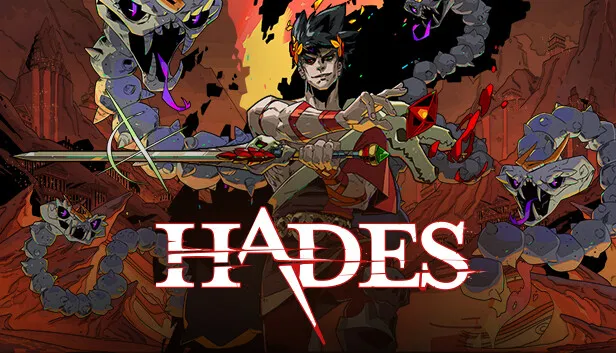
An action roguelite and the friendliest way into the genre. Every death sends Zagreus home and moves the story on, and permanent upgrades make each attempt a little easier.
The original
Slay the Spire
- iPhone
- Android
- $9.99, no ads
- PC: $24.99
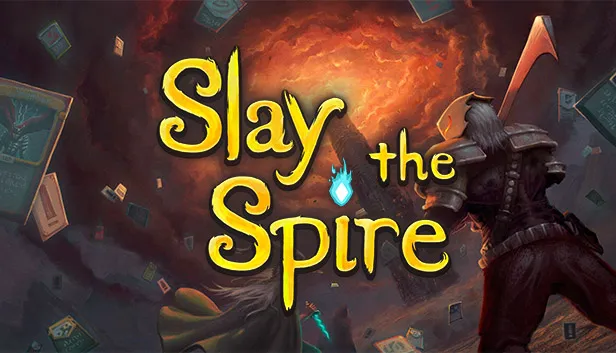
The game that made roguelike deckbuilders a genre of their own. You climb a spire, adding cards to your deck after each fight, and you can see what every enemy is about to do. It is on PC, consoles, iPhone and Android.
The original
Balatro
- iPhone
- Android
- $9.99, no ads
- PC: $14.99
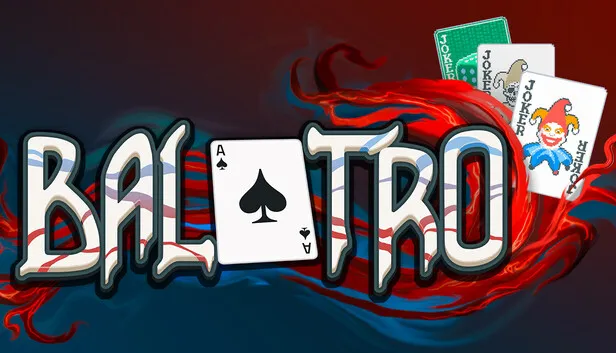
Poker hands, scored against rising targets, with jokers that bend the rules. Runs are short, and the game teaches its own rules as you play. It is on every platform, phones included.

The original
Shattered Pixel Dungeon
A traditional roguelike in the spirit of Rogue: turns, a grid, one hero and one life. It is open source, free on Android and US$4.99 on iPhone, with no ads, so it is the easiest way to try the classic style on a phone.
For more, see the best roguelikes on iPhone and Android. If you like the idea of a run where the fights play out on their own, see the best auto battler games.
We are a small team making Path of Orren, a party roguelike for phones. If this article made you want to try one, it is the one we would love you to play.
Questions
What is a roguelike in simple terms?
A roguelike is a game you play in runs. Each run goes through levels that are generated fresh, and if you die, the run is over and you start again from the beginning. The fun is in learning a little more every time and in never playing the same run twice.
What does roguelike mean?
It means like Rogue, a 1980 dungeon game in which every level was random and death was permanent. The name was picked on Usenet around 1993 for games that played the same way, such as NetHack and Angband.
What was the first roguelike?
The genre is named after Rogue (1980), but it was not the first of its kind. Beneath Apple Manor (1978, Apple II) already had random dungeons and permanent death, and dungeon games on the PLATO university network date back to 1975.
Is Minecraft a roguelike?
No. Minecraft has random worlds, and its Hardcore mode gives you only one life, but there are no runs: you build one world over a long time. Wikipedia notes that Minecraft took inspiration from Dwarf Fortress, which uses a roguelike interface.
Is Diablo a roguelike?
No, Diablo is an action RPG: you keep your character between sessions, and dying does not end it. Its random dungeons and loot came from roguelikes, though. Creator David Brevik named Rogue and NetHack among his influences.
Is Returnal a roguelike?
Returnal is a roguelite shooter. Each death sends Selene back to the start of a changing planet, but some upgrades and tools stay with her for good, so later runs go further.
Is Elden Ring a roguelike?
No, Elden Ring is an open-world action RPG with a fixed world. Its 2025 spin-off Elden Ring Nightreign is a roguelite, with three-day runs on a shrinking map, alone or with two friends.
Read next

New mobile games for iPhone and Android: November 2026
New mobile games out in November 2026 on iPhone and Android: release dates, prices, the free ones, and last month's releases. Updated every month.

Is The Bazaar on mobile?
The Bazaar mobile isn't out on iPhone or Android yet. What Tempo announced, what it will cost, how to play on your phone today, and 5 games like it.

Is Slay the Spire 2 on mobile?
Slay the Spire 2 has no iPhone or Android version yet. What Mega Crit has said, how to play it on your phone today, and 5 games to play meanwhile.