How Path of Orren took shape: from the first build to today
Where Path of Orren started, what we kept from those early days and what we built on top of it.
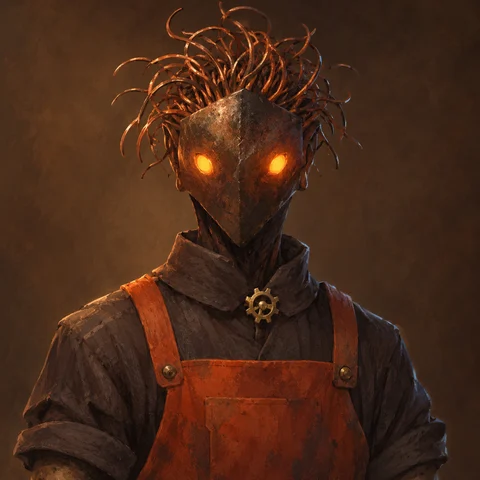

Hi, Jonas again. Last time, I told you how we decided to build our own game, and I made that sound simpler than it was. This time I want to show you how Path of Orren grew from a first version into the game it is today.
One thing first: Path of Orren is still being built. Everything in this post, from the screens to the numbers, can change before launch.
The first build
We put the first version together on July 29: three heroes, six monsters and one battlefield. You could watch a fight, and not much else. It was small, but it was the beginning of everything.
What survived
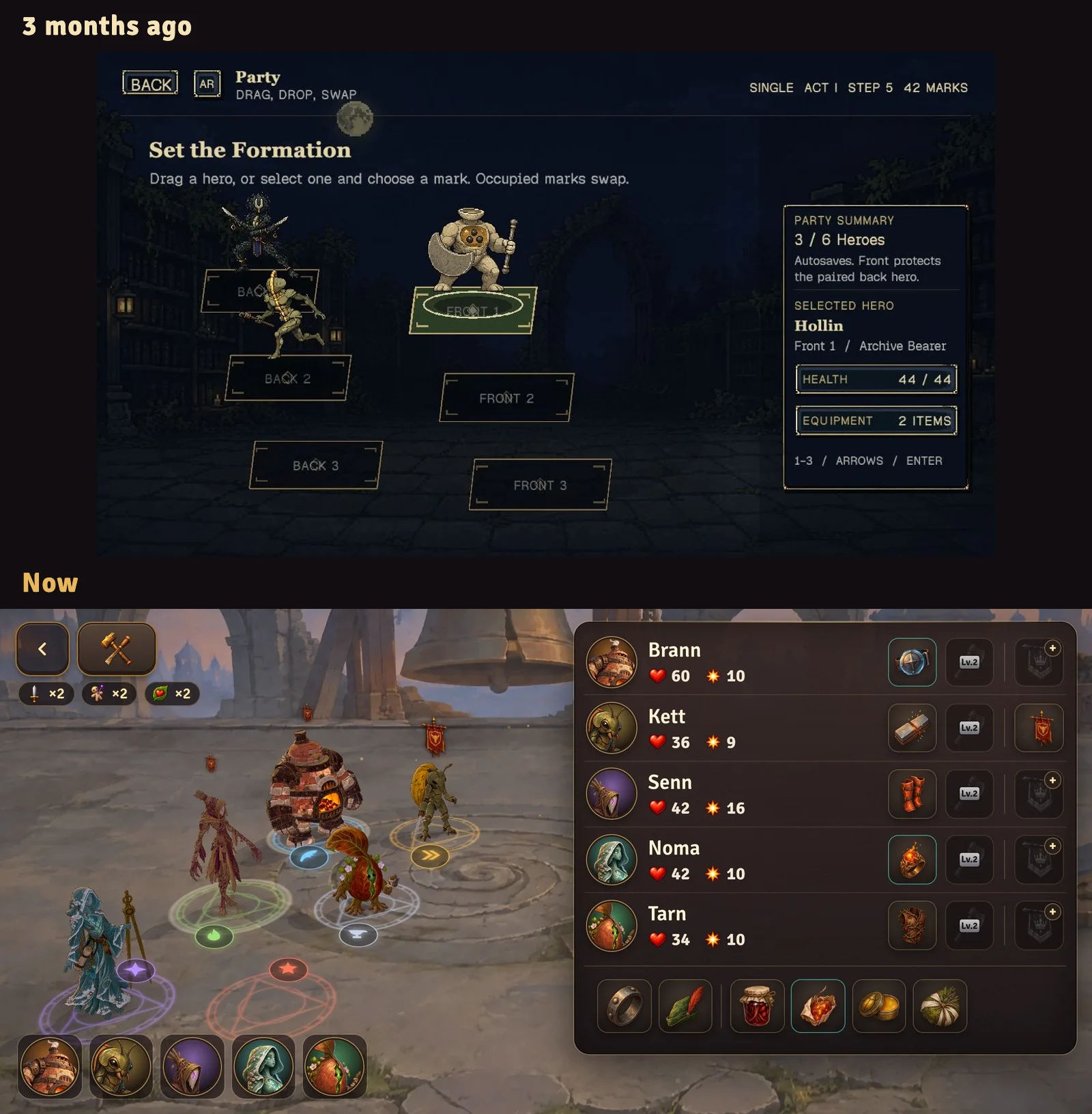
Almost nothing you see today comes from that first build. What survived is the idea: gather a party, decide who stands where, then watch your choices play out. That's still the whole game, and everything since has been built around it.
The lore and the first heroes came early too. Tarn, Brann, Kett and Noma were already there in the old version, and so were the three acts you'll walk through.
Starting again
That old version did its job. We used it as a prototype, a place to try out features without worrying much about how anything looked. But the game was getting complex, and it still didn't have a style of its own.
Once the foundation was laid, we decided it was time to refresh the whole thing. We moved to 3D, because it let our heroes move and animate the way we wanted, and we gave the game its own look. We also made it truly mobile-friendly, so that a casual player could pick it up as easily as anyone else.
Depth, one layer at a time
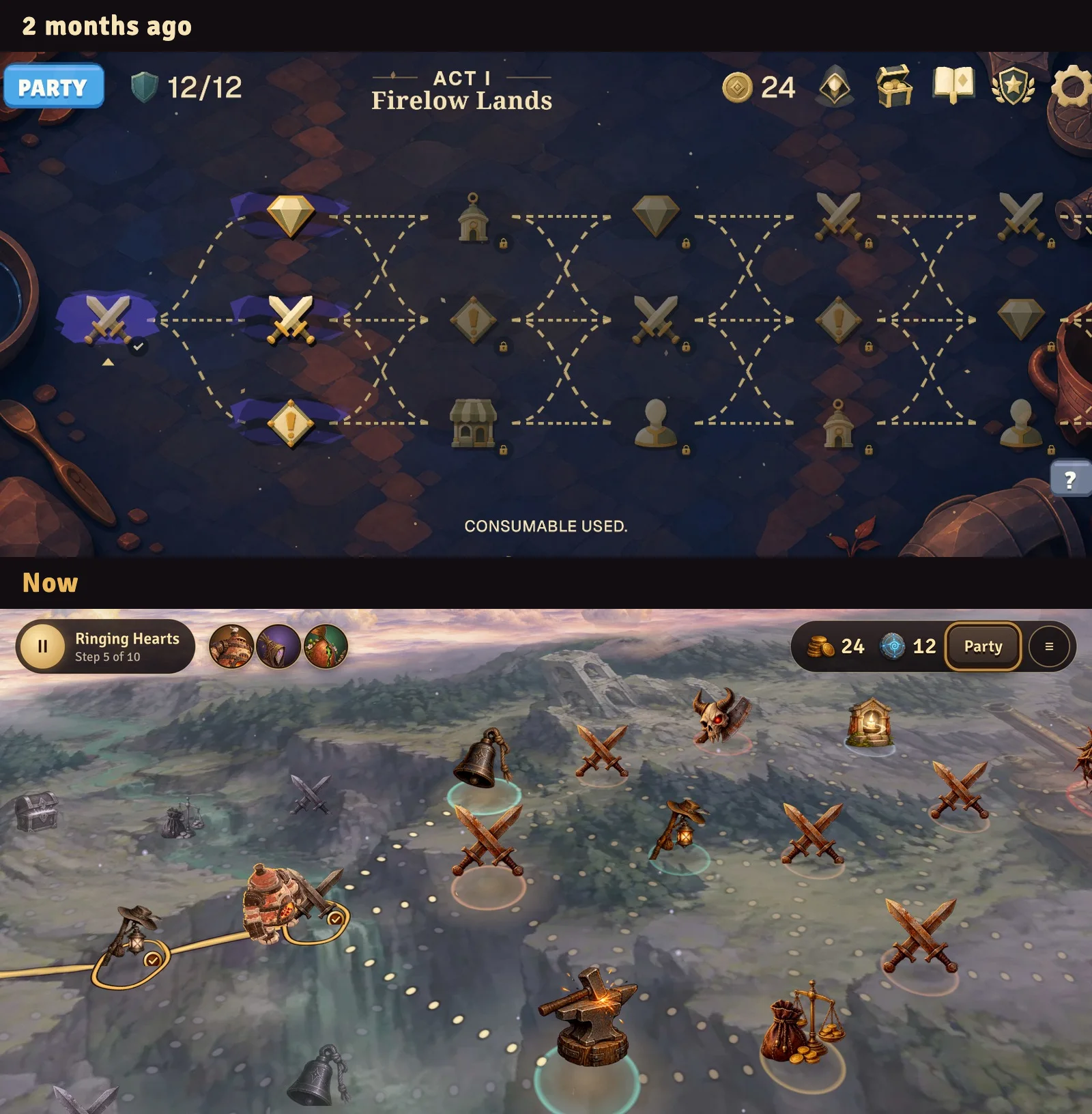
We didn't design all of this at once. We added depth little by little, and every layer came from the same question: what else can a player decide before the fight?
Formations came first, because where a hero stands should matter. Then came roles, so that a party needs more than raw damage, and class bonuses, where two heroes of one class give the whole party a small edge. After that we kept adding effects, which gave heroes and items many more ways to play off each other.
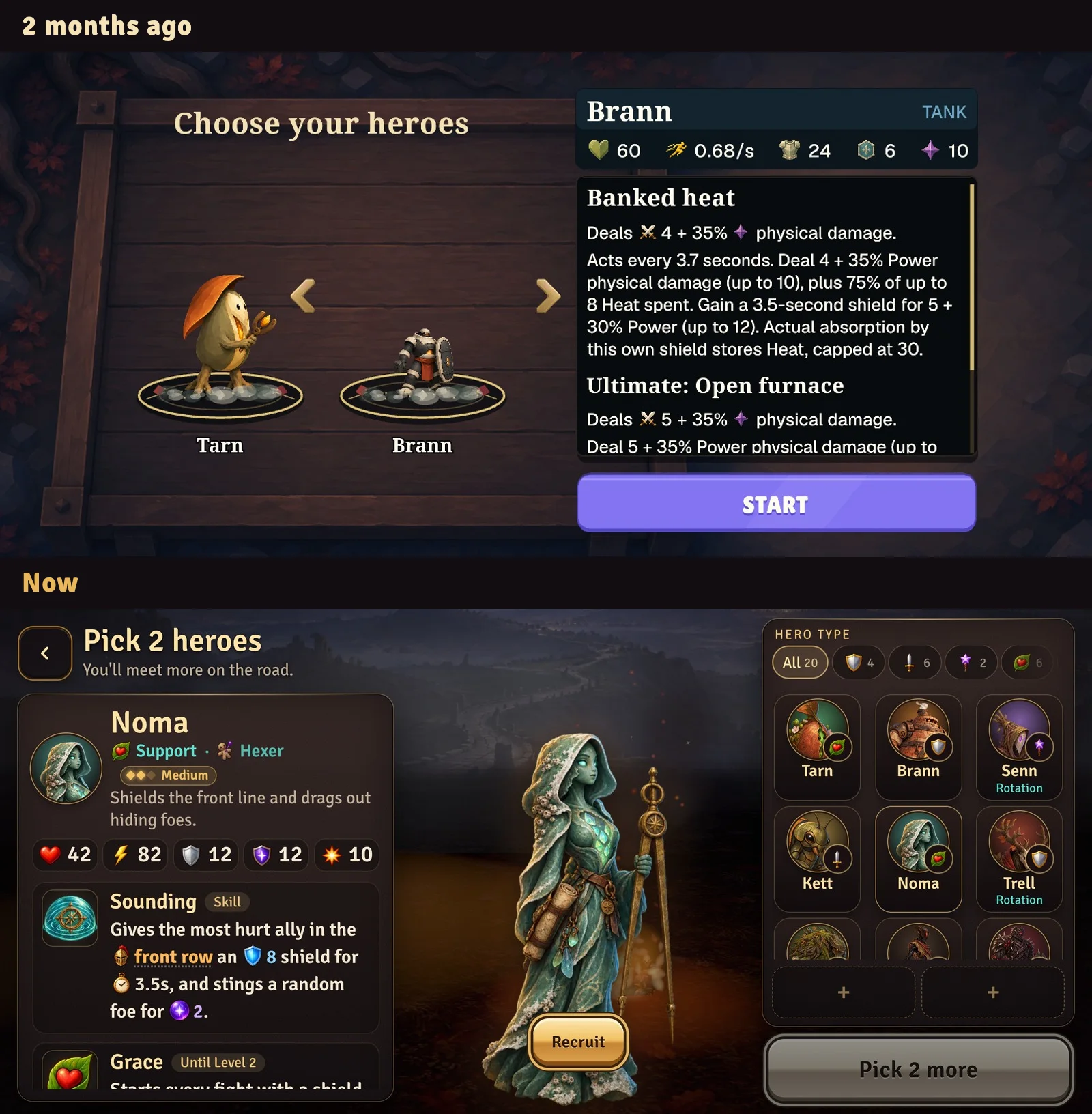
The roster grew alongside all of this. We started with 3 heroes and today there are 112, each with its own way to play, and 277 items to build them with.
Easy to start, worth mastering
Depth means nothing if it scares people off. We want you to enjoy Path of Orren even if you've never touched a roguelike, and we want it to reward you if you've played hundreds of them.
So we kept adding small things that make the game friendlier: tooltips that explain every effect where you see it, an auto-equip option that fills your empty item slots, and a Shapes window that shows how your party stands. Fights never need fast fingers, because all your decisions happen before them.
The hard part is still there if you want it. Finding the company that beats everyone in the Arena is a different game altogether.
Thanks for reading. If there is something you want us to write about here, tell us at hello@pathoforren.com.
Read next

Bellrush: a fast draft mode next to Crownfall
Bellrush, Path of Orren's fast Arena mode: draft heroes, open chests, take a relic, then fight other players until your first loss. How it works and why.

Path of Orren release date and devlog #1: what we're building
Path of Orren release date and platforms, how a run works and what the Arena is: the first devlog from the small team making a free dark-fantasy roguelike.

New mobile games for iPhone and Android: November 2026
New mobile games out in November 2026 on iPhone and Android: release dates, prices, the free ones, and last month's releases. Updated every month.