Fights worth watching: how we stage a battle
Fights in Path of Orren play out on their own, so we gave them an entrance, a camera and an ending.


Hi again. Last time, we told you how each hero plays its own way and has its own look in battle. This time we want to talk about the fight around them: how it opens, where the camera goes, and how it ends.
One thing first: Path of Orren is still being built. Everything in this post, from the screens to the numbers, can change before launch.
You decide, then you watch
In Path of Orren, every decision comes before the fight. You place your heroes on the lanes, lay your cards, press Play, and then it's out of your hands. We like it that way, because a good plan matters more than fast fingers.
But it also means the fight has a job to do. You made those choices, and now you want to see what they were worth. A battle on three lanes is busy, and a phone screen is small, so we asked ourselves how to make that moment feel big.
An entrance before every fight
It starts before the first blow. The screen splits in two along a slanted line: your sturdiest hero fills one half, and the most dangerous foe fills the other. A couple more from each side stand in the corners with their names, and if you're about to face an elite or a boss, the screen says so.
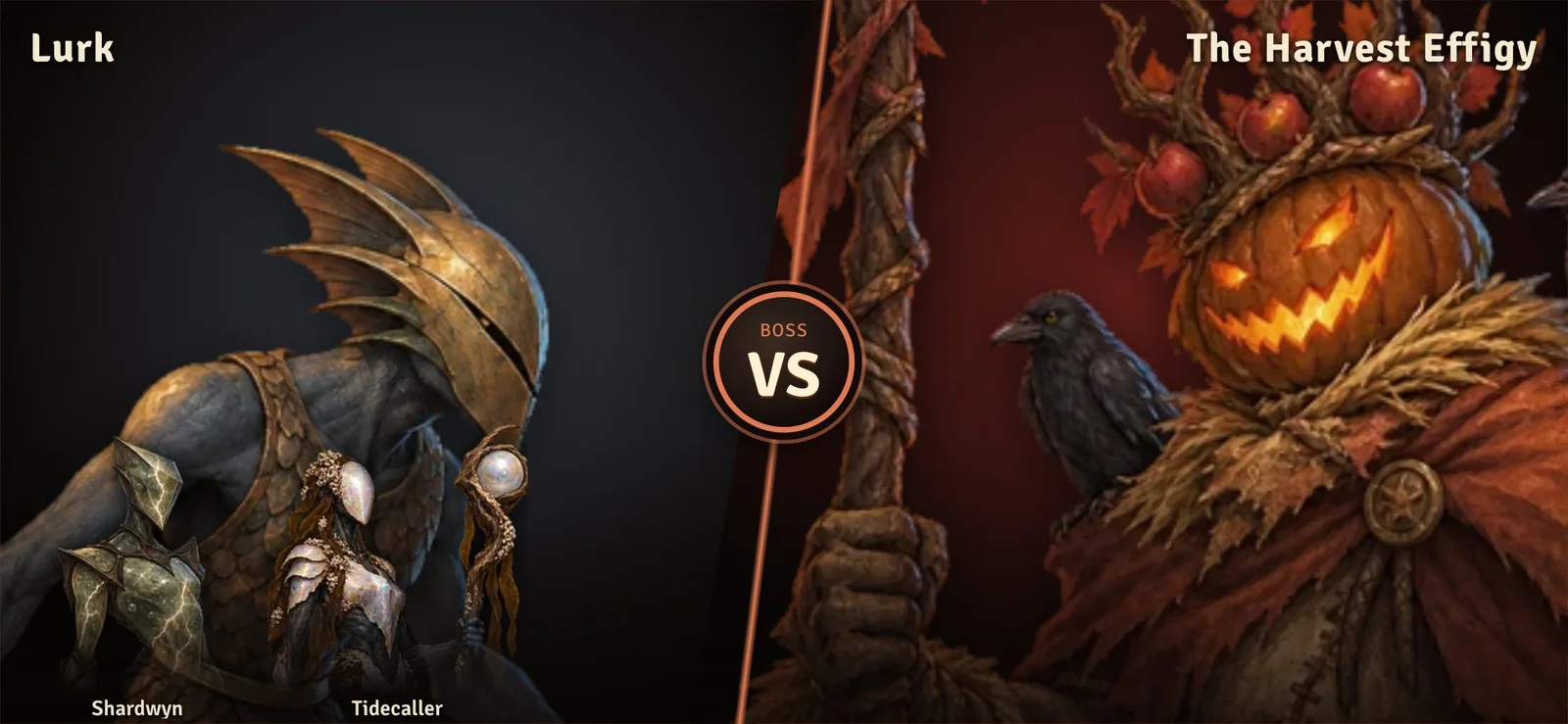
Our first version of this entrance was quicker, with more faces, all of them small. We slowed it down, kept fewer of them and made them bigger, so you have time to see who you're up against.
It's the same on the road, in Crownfall and in Bellrush: before every fight, you get to see who is walking in.
A camera that knows where to look
Once the fight begins, the camera works a little like someone filming it. On the road, it opens with a glide along the foes. After that it moves in for the moments that matter: a hero close to falling, a foe going down, a boss doing the thing that makes it a boss.
Finding the right distance took us a few tries. We built a gentle camera and a cinematic one that went in much closer, tried both, and ended up mixing the two. Then we pulled the close-ups back, twice, because they still felt a little too strong. After each one, the camera rests for a moment before it looks for the next.
Boss fights get one extra touch: the whole view leans, just a little. You may never notice it, but it makes the boss feel heavier.
The final blow
When you win, the camera pushes in slowly, right where the last foe fell. It's a small thing, but after a close fight, that's the second you want to remember.
Losses show too. When a hero falls, its cards fade with it, and a banner fades once every hero in its lane is down. You can see what you lost without reading a word.
Never in your way
A good show knows when to step aside. A tap skips the entrance, and the fight never waits for the camera: it runs at its own pace, close-up or not. If you'd rather have less movement, turn on Reduced motion in the Settings: the entrance is gone and the camera stays still.
The camera can also work for you. Before a fight, tap a hero or a foe, and it moves in on it while you read what it does. Close the sheet, and it pulls back to show you the whole board again.
Thanks for reading. If there is something you want us to write about here, tell us at hello@pathoforren.com.
Read next

Every hero plays its own way
Path of Orren has more than a hundred heroes, and none of them plays like another. How we make each one different, with a look at a few of them in a fight.

Bellrush: a fast draft mode next to Crownfall
Bellrush, Path of Orren's fast Arena mode: draft heroes and cards, take a relic, then fight other players until your first loss. How it works and why.

How Path of Orren took shape: from the first build to today
How Path of Orren took shape: the first build, what survived, why we started again, and how a game with 3 heroes grew to 112.